If you spend significant time on the road, in hotels, in RVs, or in temporary housing, the standard grounding sheet advice doesn't quite fit your life. A 6-pound queen-sized fitted sheet doesn't pack well in a carry-on. Hotel outlets are a coin flip on whether they're properly grounded. RV electrical systems have their own grounding peculiarities. And the assumption that you'll set up once and leave the sheet in place for years doesn't apply when you're moving every few weeks.
I've thought through this category enough to have specific recommendations for different travel patterns. The good news is grounding while traveling is genuinely workable. The setups just look different from a stationary home setup.
Frequent travelers: the carry-on solution
For people who travel often for work or leisure but maintain a primary home, the goal is portable grounding that fits in a normal travel bag without sacrificing the home setup.
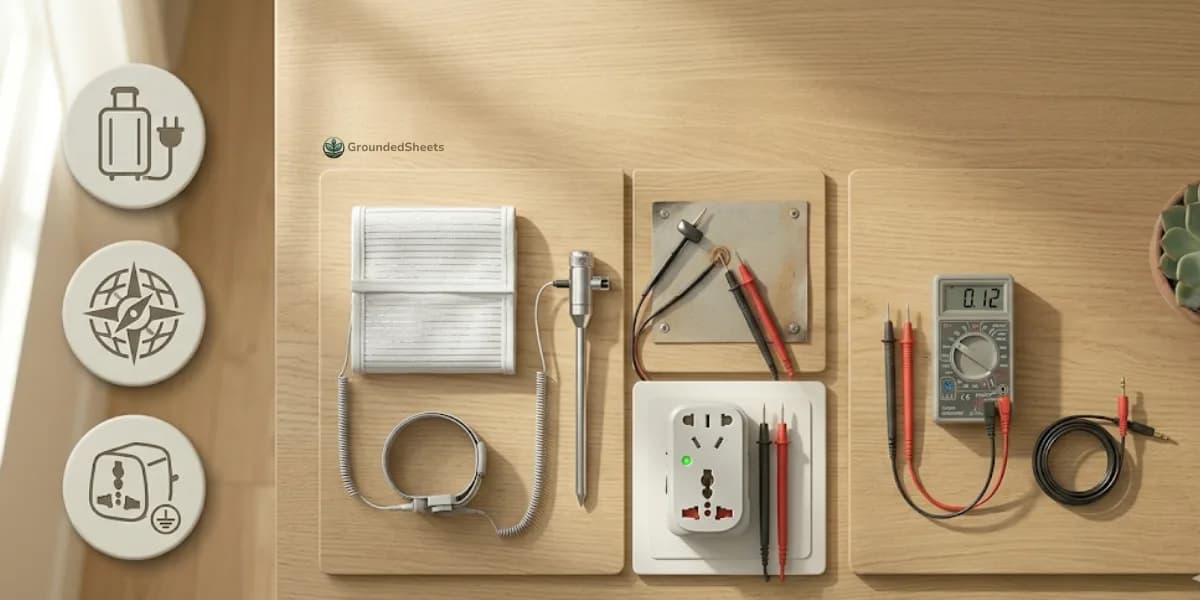
The right product here is a small grounding mat or a wristband, not a sheet. A mat that's 8x27 inches rolls up to about the size of a yoga mat strap and weighs under a pound. A wristband is even smaller. Either fits in carry-on luggage without taking meaningful space.
A grounding mat used in hotel rooms (placed under your feet at the desk, under your hand on the nightstand, or on top of the sheets where you can rest a body part on it) provides grounded contact for the hours you're using it. A wristband worn during sleep maintains contact through the night without requiring you to set up a sheet on a hotel bed.
Hotel outlet check matters. Most modern US hotels have grounded outlets, but some older properties don't. Bring a small outlet tester (the same $7 plug-in version you'd use at home) and check before plugging in. If the outlet isn't grounded, the system doesn't work and you'll know within seconds rather than wondering for the trip whether your grounding is working. how to test if your outlet is grounded
For frequent travelers, leave your primary grounding sheet on your home bed. Take a mat or wristband on the road. Trying to pack and unpack a fitted sheet in luggage is more trouble than it's worth.
RV and van life setups
RVs and converted vans have specific electrical considerations that affect grounding setups differently from stationary homes.
When an RV is plugged into shore power at a campground, the campground's electrical system grounds the RV through the shore power connection. Outlets inside the RV are then grounded the same way they would be in a house, and a standard grounding sheet plugged into an RV outlet works the same way it works in a home.
When an RV is running off battery power, generator, or solar without shore power, the situation is different. The RV's internal outlets may not have a true earth ground reference. Inverter-supplied power often passes through an isolation transformer that doesn't reference earth. In these conditions, plugging a grounding sheet into a standard RV outlet may not actually ground you to earth.
The fix for RV use without shore power is the same fix that works in apartments with bad outlets: an external ground rod. You drive the rod into the soil at your campsite or boondocking location, run a wire from the rod through a window or door seal, and connect your grounding sheet directly to it. This bypasses the RV's electrical system entirely and gives you true earth ground regardless of what's powering the RV.
For frequent RV travelers, I'd recommend buying a grounding rod kit and including it in your standard travel gear. The setup takes 15-20 minutes at each new location. The rod itself is small enough to fit in an RV's exterior storage compartment.
For people in vans or campers who park on streets or driveways where driving a rod isn't always possible, the grounding mat or wristband approach works as a fallback. You won't always have grounding, but you'll have it when you have shore power. how to install a ground rod
What to bring for a typical hotel stay
If you're traveling for a week or less, the practical kit is small.
A grounding mat (around 27x10 inches), packed in a roll with the cord wrapped around it. About 1 pound, fits in any carry-on.
A 3-prong outlet tester, the same one you use at home. Tiny and weighs almost nothing.
That's it. Total kit weight under 2 pounds. The mat goes wherever you're sitting or sleeping for extended periods. The tester verifies the outlet before you plug in.
For longer trips (two weeks or more), some travelers bring a grounding sheet in addition to the mat. A half-sheet or compact fitted sheet works for hotel beds when you'll be in the same room long enough to make setup worthwhile. Pack the sheet in a vacuum compression bag to reduce volume.
For travel to less developed countries, the outlet situation gets more complicated. Many countries have outlets that look like grounded outlets but use different grounding standards. Some have no consistent grounding infrastructure at all. For international travel outside Western Europe, North America, Australia, and similar developed grids, I'd recommend skipping plug-in grounding entirely and using a grounding sheet plus a portable ground rod kit if you're staying somewhere with soil access.
The RV-specific product picks
A few categories of grounding products work especially well in RV contexts.
Grounding mats sized for RV beds. Most RV beds are smaller than residential beds (queen-short, RV king, custom sizes). A grounding mat in the 36x60 inch range fits across the upper third of a typical RV bed and provides torso contact during sleep. Some brands sell RV-specific sizes.
Half-sheets in twin XL size. RV bedrooms often have twin or twin XL mattresses, especially in over-cab beds and bunks. A twin XL grounding half-sheet fits these spaces better than a queen-sized sheet that has to be folded under.
Compact fitted sheets in odd sizes. A few brands make grounding sheets specifically for RV mattresses, including the unusual sizes that don't match residential standards. Earth & Moon and Hooga both have some RV-compatible options.
Travel ground rod kits. Compact kits with a 3-foot rod, clamp, wire, and connection cord, all in a soft-sided case. Earthing.com sells one. So do a few smaller brands. About $30-50 for the complete kit.
What about cruise ships, planes, and trains
A few additional travel scenarios worth covering.
Planes are basically impossible to ground in. The aircraft is electrically isolated from earth by design (it's flying), and even if your grounding cord could reach an outlet, that outlet isn't connected to anything that would ground you. A grounding wristband on a plane does literally nothing electrically. Some travelers wear them anyway out of habit or comfort, which is fine, but understand it's not actually grounding you.
Trains are similar. Even the trains with passenger outlets aren't connected to earth ground in a useful way. The same wristband-as-comfort-object pattern applies.
Cruise ships are also electrically isolated from earth. The ship's power system uses its own ground reference for safety but isn't connected to actual earth. Grounding sheets and mats plugged into cruise ship outlets won't drop your body voltage in the same way they would in a home.
For travel-by-vehicle situations where actual grounding isn't possible, the honest framing is to accept the gap and resume grounding when you get back to a stationary location. Trying to maintain continuous grounding through every form of travel is more trouble than it's worth.
Honest take on travel grounding
If grounding genuinely matters to you and you travel a lot, the practical answer is:
Maintain your home setup. A real grounding sheet on a properly grounded outlet at home is your primary contact.
Bring portable products for stationary destinations. A mat or wristband works fine in hotels, Airbnbs, and friends' houses if their outlets are grounded.
Use a ground rod kit for RV camping or extended stays in places with bad outlets.
Accept the gaps during in-transit travel. Planes, trains, and ships don't accommodate grounding. That's fine. A few hours or a few days without grounding doesn't undo the benefits you accumulate at home.
Don't try to ground yourself everywhere all the time. Most users who report grounding benefits get those benefits from extended consistent contact during sleep, not from continuous 24/7 grounding. Missing a few days while traveling doesn't reset your progress. how long until grounding sheets start working
The grounding products that work for travel are not the same products that work best at home. Different form factors, different setups, different expectations. Building a small dedicated travel kit makes more sense than trying to take your home setup with you everywhere.
A grounding mat in a hotel room. A wristband on a long flight (knowing it's not actually working). A ground rod at the campsite. These are reasonable adaptations to travel that maintain grounding contact when it's possible without overcomplicating it when it isn't.
Grounding on the road
See our top picks for travel and RV life, the portable setups and ground-rod kits that work where standard outlets don't.
See Our Top Picks →