

Your grounding sheet is basically a fabric wire. That's it. That's the whole idea.
Specifically: it's a bedsheet with conductive thread (usually silver, stainless steel, or carbon) woven through the fabric, wired to a cord that plugs into the ground port of a standard wall outlet. When you plug it in, you're creating a continuous path from the surface of the sheet, through the cord, through your home's electrical grounding system, and down into the earth outside your house. Your body touches the sheet. The sheet touches the ground. Electrically, you become part of the same circuit as the dirt outside your house.
Whether that does anything meaningful for your health is a question I'm going to sidestep here, because honestly, that's a conversation for you and your doctor. What I want to do in this guide is explain what a grounding sheet actually is, what separates a good one from a bad one, and how to avoid the two or three common mistakes that make people think their sheet is broken when it's really just plugged into the wrong outlet.
What a grounding sheet is (mechanically, not mystically)
A grounding sheet is a bedsheet with conductive thread woven or knitted through it. Most use one of three materials.
Silver is the most common in the higher-end market. It's highly conductive, antimicrobial, and tarnishes slowly. You'll see sheets advertised as "5% silver fiber" or similar, which refers to the percentage of silver threads versus cotton in the weave. The more silver, the more conductive the surface, but also the more expensive.
Stainless steel, specifically grade 316L, shows up in brands like Premium Grounding. It doesn't tarnish, it survives harsh washes, and it tends to cost less than silver. The tradeoff is it can feel slightly rougher to the touch, and some people report a faint metallic sheen that silver doesn't have.
Carbon-based fabric is the newer entrant. It's non-tarnishing, affordable, and increasingly common in budget sheets. The conductivity isn't quite as high as silver, but for most practical purposes it doesn't matter, something I dig into in carbon vs silver grounding fabric.
Material | Conductivity | Durability | Feel | Price impact |
|---|---|---|---|---|
Silver fiber | Highest | Tarnishes over time, needs gentler washing | Soft, closest to standard cotton | Highest |
316L stainless steel | Good | Doesn't tarnish, survives harsh washing | Slightly rougher, faint metallic sheen | Lower than silver |
Carbon-based | Adequate for most uses | Doesn't tarnish, budget-friendly | Comparable to cotton | Lowest |
The sheet connects to a cord via a snap fastener. The cord runs to a small plug that slots into the ground port of a standard wall outlet, or, in some setups, clips to a ground rod driven into the earth outside. That's the entire system. No batteries. No electronics. No signals. Just a conductive path.
How it actually works
Your home's electrical system has three wires at most outlets: hot, neutral, and ground. The ground wire isn't there to power anything. It exists as a safety path so that if something shorts out, electricity has somewhere to go other than through you. That ground wire connects, via your home's main panel, to a physical rod driven several feet into the soil outside your house.
A grounding sheet uses this same ground wire. When you plug in the sheet, the conductive fabric is electrically connected to that dirt rod. Your skin touches the fabric. Any static charge, any induced voltage from nearby wiring, has a free path to drain away.
Here's the part worth understanding: your body, like any conductor, can hold voltage. Stand on a synthetic carpet in socks and you might be sitting at a few hundred volts of static relative to ground, which is why you get zapped touching a doorknob. Sleep on an ungrounded bed in a bedroom full of phone chargers and lamps, and you'll typically measure something between 1 and 5 volts of induced AC voltage across your skin.
A grounding sheet drops that to near zero. You can measure this yourself with a decent multimeter, which I walk through in a separate guide on testing a grounding sheet with a multimeter.
Whether that voltage reduction matters for anything beyond the measurement itself is where the debate lives, and I don't want to pretend it's settled. It isn't.
The outlet problem nobody warns you about
Here's something I wish every grounding sheet retailer put on the box in large print: if your outlet isn't properly grounded, your sheet does nothing.
A lot of older US homes have ungrounded outlets. From the outside they look like a standard three-prong outlet. From the inside, the ground hole isn't actually connected to anything. Houses built before the 1960s often have this issue. So do a lot of apartments where someone swapped a two-prong for a three-prong without upgrading the wiring. Reversed hot/neutral wiring is another quiet killer.
You can test any outlet in about ten seconds with a three-dollar plug-in outlet tester, which I cover step by step in how to test if your outlet is grounded. Every hardware store sells them. If the ground light doesn't come on, your grounding sheet is going to be cosmetically pleasant and functionally inert.
There's a second, quieter assumption that trips people up almost as often, and it rarely makes it onto the product page: the sheet has to actually touch your skin, or come close to it. Layer a thick mattress topper between you and the sheet, cover it with a heavy synthetic top sheet, or sleep in flannel pajamas from neck to ankle, and you've built yourself an insulator. The conductive fabric can't do anything through three layers of foam and polyester. A thin cotton or linen sheet on top is fine. A comforter directly against your skin with nothing else is fine. Everything in between is where people quietly lose the effect and blame the product instead of the setup.
This is the single most common reason people return a sheet convinced it's defective. The sheet is fine. The wall is the problem.
If you're in that boat, you have two options. Call an electrician and have the outlet rewired with a proper ground, or install an exterior ground rod and run a ground wire from it to your sheet directly. Most premium grounding brands sell rod kits for about thirty dollars.
Types of grounding sheets you'll run into
The market's bigger than most people realize. I think of it in rough tiers.
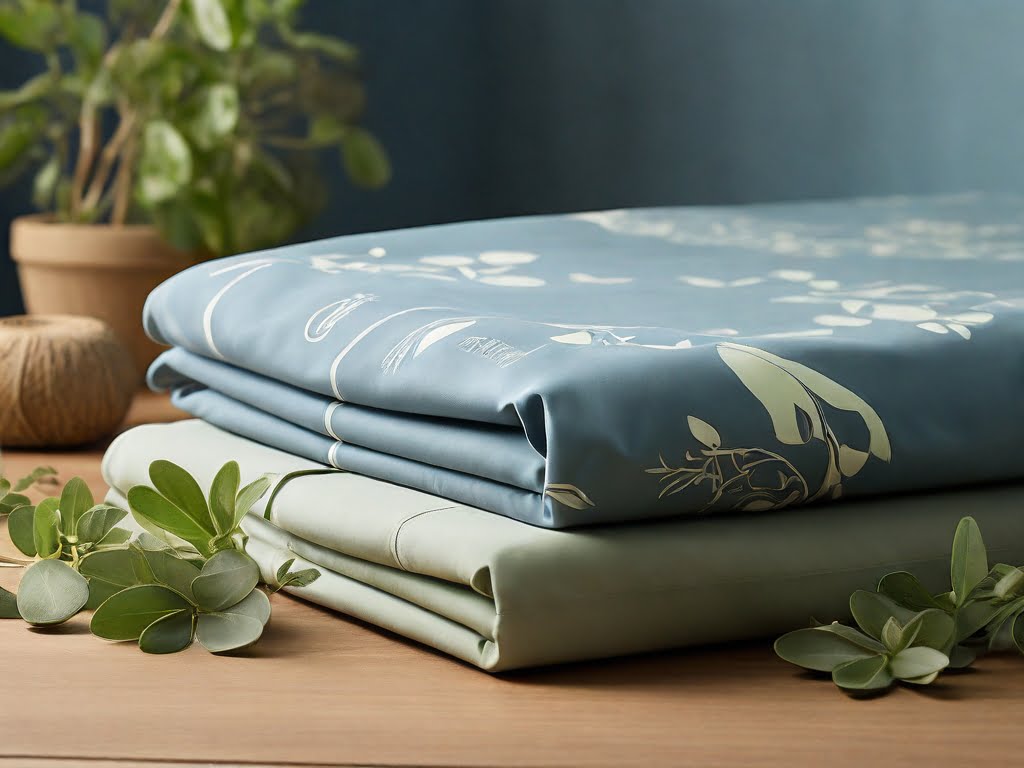
Fitted sheets cover the whole mattress and tuck under like any other fitted sheet. You sleep directly on them, or under a thin cotton sheet you don't mind sleeping through. These are the most common form factor and the easiest to integrate into an existing bed. If you're weighing formats, fitted vs flat vs half-sheet breaks down the tradeoffs.
Sizing follows standard mattress dimensions with one wrinkle: deep pockets. A fitted grounding sheet needs to reach the actual depth of your mattress plus any topper, and a lot of budget sheets stop at 14 inches when modern mattresses run 16 to 18. If you're not sure what you need, the sizing guide breaks it down bed by bed, including the RV, split-king, and California King cases that trip people up most.
Flat sheets and half-sheets lie across the top of the mattress, usually at torso height. They're cheaper, less comprehensive, but perfectly fine if you mainly want contact with your back and shoulders.
Grounding mats are small, firm, rubber-backed pads you can throw on a chair, a desk, or the foot of a bed. They're the gateway product because they cost less and you can test them without rebedding your whole mattress.
Grounding pillowcases are the one I'd skip for most people. Contact time is shorter, your head moves around, and the benefit (if there is one) seems marginal compared to a full sheet. Useful as an add-on, not a primary purchase.
What makes one sheet better than another

Three things, really.
First, the conductive fabric matters. A sheet with 5% silver will measure lower resistance, stay conductive longer, and age more gracefully than a sheet with 2%. The cheap Amazon listings that don't publish a percentage are usually around 2% or less, and they degrade quickly.
Second, the weave and construction. Silver fiber by itself doesn't do much if it's trapped under a layer of non-conductive cotton on the sleeping surface. Look for sheets where the conductive thread is woven into the top layer, not hidden on the underside.
Third, warranty and washability. Grounding sheets aren't disposable, but they're not forever either. A good sheet handles fifty to a hundred gentle washes before conductivity starts to drop. Brands that offer two-year warranties and publish wash guidelines are telling you they stand behind their product. Brands that don't, aren't.
The truth is, above about a hundred and fifty dollars for a queen, you're paying more for brand and packaging than conductivity. Below about eighty, you're usually getting a sheet that'll be dead in six months. If you want my actual brand picks, I keep them in the best grounding sheets of 2026. For a side-by-side of every brand I've actually reviewed, with material percentage, starting price, and an honest one-line verdict for each, the full reviews index has the comparison table.
Who actually wants one of these
I'll give you my honest read.
People who are already deep into sleep optimization (blackout curtains, cool bedroom, consistent schedule) and want to try one more variable. People who've read the grounding literature and found it interesting enough to test for themselves. People dealing with persistent low-level aches who've tried most of the obvious fixes and are willing to experiment. Athletes looking at recovery tools.
People who probably shouldn't buy one: anyone hoping it'll fix a serious medical condition (please see your doctor first), anyone with a pacemaker or implanted medical device without clearing it with their cardiologist, and anyone who just wants a ritual purchase to feel like they did something about their sleep without actually changing their habits.
A grounding sheet is a small piece of equipment. Not a miracle. Not a scam. It's a fabric wire with some reasonable mechanical design behind it (I tackle the scam question head-on separately), and whether it's worth your money mostly depends on whether you'll actually use it and whether your outlet is actually grounded.
Start with the outlet. Everything else is secondary.
Keep reading
This is the overview. For the details, here are the deeper guides:
The physics explained in more depth: how grounding sheets actually work
EMF and dirty electricity, what's actually connected to a grounding sheet and what isn't
Do grounding sheets actually work? What’s measurable and what’s just reported
Myths vs facts and are grounding sheets a scam?, the honest skeptic's take
Possible side effects and a realistic timeline of what to expect
Prefer a different format or product? Compare earthing sheets, grounding mats, pillowcases, blankets, patches, and grounding shoes
New to the terminology? The grounding glossary defines every term in plain English
When you're ready to buy, see the best grounding sheets of 2026.
Frequently Asked Questions
- Do grounding sheets really work?
- The mechanical part is not in dispute: a grounded sheet measurably drops your body's induced AC voltage, and you can verify it yourself with a cheap multimeter. Whether that translates into a health benefit you'd actually notice is less settled. We break down exactly what's proven and what isn't in do grounding sheets actually work.
- What does a grounding sheet actually do?
- It connects your body, through conductive thread, a cord, and your home's electrical ground, to the same electrical potential as the earth outside your house. That's the entire mechanical function. Any claims beyond that are about what that connection might do for you, not what the sheet itself does.
- Are grounding sheets dangerous?
- For most people, no, as long as your outlet is actually grounded and the cord has its inline resistor. The real risks are narrow and specific: an ungrounded or miswired outlet, silver sensitivity in some users, and a few medical conditions worth a doctor's input first. The full breakdown is in grounding sheet side effects and safety.
- How do you set up a grounding sheet?
- Test your outlet with a three-light tester first, since a large share of "broken" sheets are actually fine sheets plugged into ungrounded outlets. Then fit the sheet like a normal bedsheet, snap the cord to the sheet's connector, and plug the other end into the outlet's ground port. Full steps are in how to set up a grounding sheet.
- What size grounding sheet do I need?
- Match your mattress size and check the pocket depth against your mattress plus any topper, since budget sheets often stop at 14 inches while modern mattresses run deeper. RV, split-king, and adjustable-base setups each have their own quirks, covered in the sizing guide.
We've compared every major brand — silver vs. stainless steel, budget vs. premium, single vs. queen. Our top picks in one place.
See Our Top Picks →